Reviewing Tulip Card Templates for Real Embroidery Projects
As a designer who spends more time staring at stitch simulations than I care to admit, I have learned that not every digital file translates well to fabric. Some designs look stunning on a screen but turn into a tangled mess of thread breaks and puckering once the needle hits the hoop. That is why I approach new assets with a healthy dose of skepticism. Recently, I pulled up Tulip Card Templates to evaluate its potential for a batch of custom spring-themed tote bags I am producing for a local boutique. What I found was a surprisingly versatile asset that bridges the gap between digital crafting and traditional machine embroidery, provided you understand its structural nuances.
First Impressions: Mood and Visual Personality
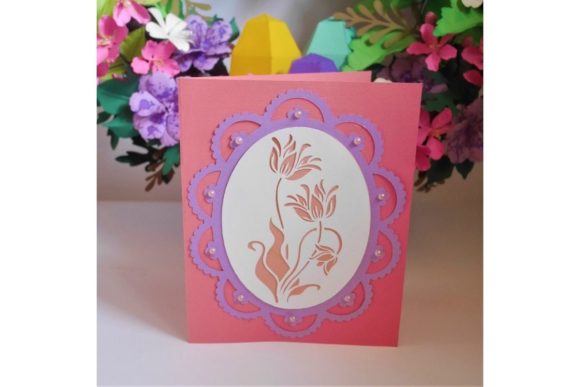
The first thing that strikes you about Tulip Card Templates is its clean, organic silhouette. It does not rely on excessive detailing or chaotic lines. Instead, it offers a calm, botanical mood that feels both modern and timeless. For an embroidery designer, this simplicity is a gift. Complex shapes often require dense fill stitch areas that can stiffen fabric, but the open nature of this template suggests a lighter touch. The visual personality is gentle, making it an ideal candidate for projects where subtlety is preferred over loud branding. It feels like a design that belongs on high-quality linen or soft cotton, rather than synthetic performance wear.
Since this asset falls under the Shapes category and is delivered as a 3D SVG, it offers a unique flexibility. While my primary focus is machine embroidery, having a scalable vector format means I can manipulate the size without losing edge clarity. This is crucial when adapting a design for different hoop size constraints. Whether I am working with a 4x4 inch hoop for a pocket detail or a larger frame for a back-panel statement piece, the geometry holds up.
Real-World Application: From Screen to Stitch
To test the practical viability of Tulip Card Templates, I imagined a specific real-life scenario: creating a line of personalized baby items for a spring collection. Baby fabrics are notoriously tricky; they are often thin, stretchy, and sensitive to heavy stitching. A dense design would ruin the drape of a onesie. However, the tulip shape allows for creative interpretation. I envisioned using a satin stitch border for the petals to give them a smooth, raised texture, while keeping the center open or using a light running stitch for veins. This approach minimizes stitch density, preserving the softness of the garment.
Beyond baby clothes, this design shines in custom apparel like sweatshirts and t-shirts. For a recent client request involving sweatshirt embroidery, I needed a design that would not buckle the thick fleece. The tulip template allowed me to scale the design up significantly. By using a wider satin column, the design maintained its integrity without requiring thousands of stitches. It also works beautifully as an embroidered patch. Because the shape is self-contained and recognizable, it creates a strong visual impact even when stitched on twill or felt backing before being applied to a tote bag design or cap.
For Etsy sellers and small shop owners, versatility is key to profitability. This template can be easily adapted for holiday embroidery projects, such as Easter gifts or Mother’s Day accents. The natural theme makes it evergreen, meaning it does not become obsolete after a single season. When creating printable mockup assets for your online store, the clean lines of the tulip render beautifully in digital previews, helping customers visualize the finished product before they buy.
Navigating Challenges: Where Caution is Needed
While Tulip Card Templates is rated as DIFFICULTY EASY, experienced makers know that "easy" is relative to preparation. There are specific scenarios where this design requires careful handling. For instance, stitching on dark fabric can sometimes hide the subtle details of a simple shape if the thread colors do not offer enough contrast. I always recommend testing the design in black and white mockups first to ensure the silhouette remains distinct.
Another consideration is the surface texture. On highly textured fabrics like wool or terrycloth, the fine points of the tulip might get lost. In these cases, increasing the stitch width or adding a slight underlay can help define the edges. Additionally, if you are working on curved surfaces like caps, the placement of the tulip is critical. Placing it too close to the seam or the curve of the brim can cause distortion. Always use a proper stabilizer—cut-away for stretchy knits and tear-away for stable wovens—to prevent puckering, especially if you are using a dense fill.
It is also important to note the file types mentioned in the product description, such as Silhouette, Scan, and Cricut. If you are primarily a machine embroiderer, ensure you are converting or using the correct digital embroidery file format for your machine. Do not assume a SVG meant for cutting will automatically generate optimal stitch paths for embroidery without review. Always check the applique design settings if you plan to use fabric layers within the tulip shape.
Enhancing Brand Value and Customer Trust
From a business perspective, the quality of your design assets directly impacts brand consistency and customer trust. Using a well-balanced template like Tulip Card Templates signals professionalism. It shows that you care about the aesthetic harmony of your handmade product. Customers are increasingly discerning; they can tell when a design is cluttered or poorly scaled. A clean, elegant tulip adds perceived value to a simple kitchen towel or pillow cover, transforming it from a basic item into a personalized gift worth paying for.
Furthermore, the ease of use associated with this template allows for faster production times. For craft business owners, time is money. A design that stitches out cleanly without constant thread breaks or trimming saves labor hours. This efficiency allows you to scale your small shop product lines more effectively, whether you are fulfilling orders for commercial embroidery clients or stocking up for a craft fair.
Practical Designer Notes for Best Results
Before you commit to a large production run, follow these practical steps to ensure success with Tulip Card Templates:
- Test on Scrap Fabric: Always stitch a sample on the same type of fabric you intend to use for the final product. Check for puckering and registration.
- Check Thread Contrast: Ensure your thread choice stands out against the fabric. Monochromatic looks can be chic, but they require precise tension control.
- Review Stitch Density: If you are digitizing this yourself from the SVG, keep the density moderate. Over-stitching can make the fabric stiff and uncomfortable.
- Confirm Hoop Size: Make sure the scaled design fits comfortably within your hoop, leaving at least an inch of margin on all sides.
- Inspect Small Details: Zoom in on the digital preview. Are the curves smooth? Are there any jagged edges that need smoothing in your software?
- Verify Licensing: Before selling design assets or finished items commercially, confirm the license terms provided with the download. Ensure you have the right to use it for commercial embroidery projects.
- Use Proper Stabilizer: Match your stabilizer to your fabric. A lightweight cut-away is often safest for garments that will be washed frequently.
In conclusion, Tulip Card Templates is a solid addition to any designer’s library. It offers the flexibility needed for diverse applications, from baby embroidery to sophisticated home decor. By respecting the material constraints and applying thoughtful digitizing practices, you can create stunning, high-value pieces that resonate with customers. It is a reminder that sometimes, the simplest shapes, when executed with precision, make the most lasting impression.